Remote and hybrid work is no longer a trend—it’s the operating model.
Across Australia, millions of employees now work from home at least part of the week, with hybrid arrangements becoming the dominant structure across business, corporate and Government environments.
But while flexibility has increased… engagement hasn’t kept up.
Recent data shows:
- Employee engagement in Australia has dropped to as low as 16%
- Remote workers report the lowest engagement levels compared to onsite teams
- Over 50% of remote employees feel less connected to their colleagues
For large organisations, this creates a serious challenge:
How do you keep your people connected, aligned, and performing—when they’re not physically together?
The Hidden Risk of Remote Work: Disconnection
Most leaders assume remote work is a technology problem.
It’s not says John Wright, Senior Partner at The DISC Agency.
It’s a human behaviour problem.
When teams are distributed:
- Communication becomes more transactional
- Misunderstandings increase
- Relationships weaken
- Feedback loops slow down
- And culture… becomes diluted
Even more telling, research shows employees are willing to sacrifice 4–8% of their salary just to retain remote flexibility—but that same flexibility comes with risks to connection and collaboration if not managed properly.
This is where many organisations fall short.
They’ve adapted where people work…
But not how people work together.
Why Traditional Engagement Strategies No Longer Work
Town halls, surveys, and leadership messaging still have their place—but in remote environments, they’re not enough.
Why?
Because engagement today is driven by daily interactions, not quarterly initiatives.
In hybrid teams:
- 77% of employees report spending more time coordinating digitally
- Meetings increase, but connection often decreases
- Communication volume goes up… but clarity goes down
The result?
Teams are busy—but not always aligned.
Communicating—but not always understood.
Working—but not always engaged.
The Shift: From Engagement Programs to Behavioural Intelligence
High-performing organisations are making a critical shift:
They’re moving from engagement initiatives → to behavioural intelligence.
Because engagement isn’t created by perks, policies, or platforms…
It’s created by how people:
- Communicate
- Respond under pressure
- Give and receive feedback
- Adapt to different personalities
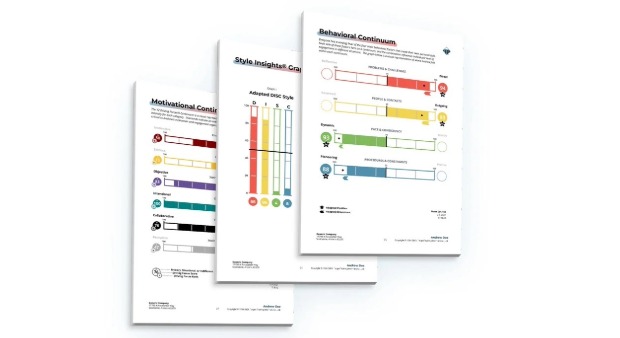
This is where tools like the TTISI Talent Insights Engagement Report become powerful.
How Leading Organisations Are Solving the Remote Engagement Problem
At The DISC Agency, we’re seeing a clear pattern across large corporate and Government departments.
The organisations getting this right are doing three things differently:
They Make Behaviour Visible
In remote teams, you lose the informal cues:
- Body language
- Tone shifts
- Office interactions
Behavioural profiling brings this back—on paper.
Your team gains clarity on:
- How they prefer to communicate
- What motivates them
- How they respond to stress
- Where friction is likely to occur
This removes guesswork and replaces it with shared understanding.
They Train Teams to Adapt (Not Just Understand)
Awareness alone doesn’t change behaviour.
The best organisations go further:
- Teaching leaders how to adapt communication styles
- Showing teams how to flex across DISC styles
- Embedding practical tools into daily interactions
Because in a remote world:
The ability to adapt your communication is no longer optional—it’s critical.
They Focus on Connection, Not Just Productivity
Research consistently shows that connection drives engagement, retention, and performance.
Yet connection is the first thing lost in remote teams.
High-performing organisations actively rebuild it by:
- Creating structured communication rhythms
- Aligning leadership styles
- Strengthening trust across distributed teams
Where the Talent Insights Engagement Report Fits
The TTISI Talent Insights Engagement Report is specifically designed for this environment.
It combines:
- DISC (how people behave)
- Driving Forces (why they do what they do)
To give organisations a clear, actionable view of engagement at an individual and team level.
For large organisations and Government departments, this means:
Identifying disengagement risks early
Understanding what drives each employee
Improving leader-to-team communication
Strengthening collaboration across locations
Creating consistent engagement strategies across departments


The Reality for Leaders in 2026
Hybrid work isn’t going away.
In fact, the majority of Australians now expect it—and organisations that resist it risk losing talent.
But flexibility without structure leads to disengagement.
And disengagement leads to:
- Reduced performance
- Increased turnover
- Weakened culture
- Poor collaboration
Final Thought: Engagement Is No Longer a “Nice to Have”
For large, distributed teams—especially in corporate and Government environments—
Engagement is now a strategic capability.
The organisations that win in this new world will be the ones that:
- Understand their people deeply
- Equip leaders with practical tools
- And create consistent, scalable ways to build connection—regardless of location
Ready to Strengthen Engagement Across Your Remote Workforce?
If you’re managing a large remote or hybrid team and want to:
- Improve communication
- Increase engagement
- Strengthen team connection
- And build high-performing leaders
The DISC Agency can help.
Get in touch to explore the Talent Insights Engagement Report and how it can be rolled out across your organisation.
Download a sample Talent Insights Engagement Report Here.