
By John Wright (CPBA, CPEQA, CPMA)– Senior Partner, The DISC Agency
You’ve had the conversation before.
Probably more than once.
Maybe dozens of times.
It starts with something small—a comment, a decision that needs to be made, something that wasn’t done, a change of plans, money, family, work, the kids or simply the way something was said.
Before long, you’re back in familiar territory.
One person becomes frustrated.
The other becomes defensive.
One wants to talk about it immediately.
The other needs space.
One pushes harder because they want the issue resolved.
The other withdraws because they feel overwhelmed.
And eventually, one of you says:
“Why do we keep having the same argument?”
It’s one of the most common—and exhausting—patterns couples experience.
But here’s something many couples never consider:
You may not be arguing about what you think you’re arguing about.
The issue on the surface might be money, household responsibilities, intimacy, parenting, work, social commitments or a decision about the future.
But underneath the argument, there may be something else happening.
You may simply have two very different behavioural and communication styles trying to solve the same problem.
And neither of you fully understands the other.
That is where DISC Relationship Insights™ can be incredibly valuable.
Rather than focusing only on what couples argue about, DISC helps couples explore how each person naturally communicates, responds to pressure, processes information, makes decisions and deals with conflict.
For many couples, that creates a powerful realisation:
“Maybe my partner isn’t trying to be difficult. Maybe they simply experience and respond to situations differently from me.”
That shift—from judgement to understanding—can completely change the conversation.
Why Do Couples Keep Having the Same Arguments?
Recurring arguments can be incredibly frustrating because they create the feeling that nothing is ever truly resolved.
You talk.
You disagree.
You make up.
Things improve.
Then, weeks or months later, the same pattern appears again.
Why?
Because sometimes couples resolve the immediate issue without understanding the behavioural pattern underneath it.
Imagine this common relationship dynamic.
One partner wants to address problems immediately.
They value directness.
When something is wrong, they want to talk about it, make a decision and move forward.
Their partner is different.
They need time to process what has happened.
They prefer calm conversations.
When emotions are running high, they may withdraw until they feel ready to talk.
Neither approach is necessarily wrong.
But without understanding their differences, both partners may completely misinterpret what is happening.
The first partner may think:
“They’re avoiding the problem.”
The second may think:
“They’re attacking me and won’t give me space.”
So the first person pushes harder.
The second withdraws further.
The more one pushes, the more the other retreats.
And suddenly, the couple is no longer discussing the original problem.
They are reacting to each other.
This is one of the reasons understanding behavioural styles can be so valuable in relationships.
Sometimes the breakthrough isn’t learning how to argue better.
It’s understanding why the argument keeps happening in the first place.
The Relationship Problem That Often Hides in Plain Sight
When couples struggle, they may start asking difficult questions:
- Are we compatible?
- Have we grown apart?
- Does my partner still care?
- Why doesn’t my partner listen to me?
- Why do I feel misunderstood?
- Why does every difficult conversation turn into an argument?
- Why does my partner shut down?
- Why does my partner become so emotional?
- Why does my partner need to control everything?
- Why can’t we communicate anymore?
Sometimes these are important questions.
But there is another question worth asking:
“Do we actually understand how each other is wired behaviourally?”
Because people naturally communicate differently.
They respond to stress differently.
They make decisions differently.
They process conflict differently.
They have different tolerances for pace, change, detail, emotion, risk and uncertainty.
They may even have completely different definitions of what “good communication” looks like.
One person thinks being direct is honest.
Their partner experiences it as blunt.
One person thinks taking time before responding is sensible.
Their partner experiences it as avoidance.
One person asks lots of questions because they need information.
Their partner thinks they are being critical.
One person talks through their emotions.
The other processes internally.
One wants certainty.
The other wants flexibility.
One wants the facts.
The other wants connection.
And here is where relationships become complicated:
We tend to judge our partner’s behaviour through the lens of our own behavioural style.
We assume our way is normal.
And when our partner responds differently, we can start assigning negative intent to perfectly natural behaviour.
That is where misunderstandings begin.
What Is DISC for Couples?
DISC is a behavioural profiling framework that helps people better understand how they naturally communicate and interact with others.
The four primary DISC behavioural dimensions are:
Often direct, decisive, fast-paced and results-focused.
Often expressive, enthusiastic, optimistic and people-focused.
Often patient, supportive, calm and relationship-focused.
Often analytical, careful, systematic and detail-focused.
Importantly, people are not simply one letter.
Most people display a combination of DISC behavioural characteristics, with some tendencies being more natural or pronounced than others.
In a relationship context, these differences can influence:
- how you communicate
- how quickly you make decisions
- how you respond to conflict
- how you behave under pressure
- how much detail you need
- how you react to change
- how you express your thoughts
- how you listen
- what frustrates you
- how others may perceive your behaviour
Understanding these differences doesn’t mean putting your partner into a box.
It means having a framework that can help answer a question many couples struggle with:
“Why does my partner respond like that?”
How Different DISC Styles Can Create Relationship Conflict
Let’s look at some examples.
When a High D Partner Wants an Answer—Now
A partner with strong Dominance characteristics may prefer to address an issue quickly.
They may say:
“Let’s just talk about it and sort it out.”
Their intention may be positive.
They want resolution.
But to a partner who prefers more time to process information, that direct approach may feel confrontational or demanding.
The D-style partner becomes frustrated because they aren’t getting an answer.
The other partner feels pressured.
Both escalate.
The solution may not be for either person to fundamentally change who they are.
It may simply be recognising:
One person needs resolution. The other needs processing time.
Once that is understood, the conversation can change.
When a High I Partner Needs to Talk
Someone with strong Influence characteristics may naturally process experiences by talking.
They may be expressive and want emotional engagement.
When their partner is quiet, they may wonder:
“Why aren’t you talking to me?”
But a quieter or more analytical partner may simply need time to think.
Silence may not mean:
“I don’t care.”
It may mean:
“I’m still processing this.”
Understanding that difference can prevent silence from being interpreted as emotional rejection.
When a High S Partner Avoids Conflict
A partner with strong Steadiness characteristics may value harmony.
They may dislike confrontation and prefer calm, predictable interactions.
When conflict occurs, they may withdraw or become quieter.
Their partner might interpret this as:
- avoidance
- stubbornness
- disinterest
- emotional distance
But internally, the S-style partner may simply be trying to prevent the situation from escalating.
Once both partners recognise the pattern, they can create a safer way to have difficult conversations.
When a High C Partner Asks Too Many Questions
A partner with strong Compliance characteristics may need information before making decisions.
They may ask:
- Why are we doing this?
- How much will it cost?
- What are the options?
- Have we considered this?
- What happens if something goes wrong?
Their partner may hear:
“You don’t trust my judgement.”
But the intention may simply be:
“I need information before I feel comfortable making this decision.”
That distinction matters.
Because once again, the behaviour and the intention may be completely different.
The Dangerous Gap Between Behaviour and Intent
One of the biggest relationship problems occurs when we confuse our interpretation of behaviour with our partner’s intention.
Your partner says very little.
You think:
“They don’t care.”
Your partner asks questions.
You think:
“They don’t trust me.”
Your partner wants an immediate answer.
You think:
“They’re controlling.”
Your partner wants time alone.
You think:
“They’re shutting me out.”
Your partner talks constantly about the issue.
You think:
“They won’t let it go.”
But what if the interpretation is wrong?
DISC can help couples separate behaviour from intent.
Instead of automatically assuming:
“My partner is doing this to me.”
You can begin asking:
“Could this simply be how my partner naturally responds to this situation?”
That single question can create enormous change.
Because curiosity is much more constructive than assumption.
Why Communication Advice Often Doesn’t Work for Couples
Couples are constantly told:
“You need to communicate better.”
That’s probably true.
But what does “better communication” actually mean?
Talk more?
Listen more?
Be more honest?
Be more patient?
The problem is that generic relationship advice doesn’t always account for behavioural differences.
A communication strategy that works beautifully for one person may frustrate another.
A highly direct partner might appreciate:
“Here’s the problem. Here are our options. What do you want to do?”
A partner who values steadiness may respond better to:
“There’s something I’d like us to talk about. There’s no pressure to decide immediately. When would be a good time?”
Same issue.
Completely different delivery.
DISC helps couples move beyond the idea that communication is simply about saying more.
It introduces a much more useful principle:
Effective communication is not just about how you prefer to communicate. It is also about understanding how your partner prefers to receive communication.
That is a skill that can strengthen almost every relationship.
What Happens When One Partner Pushes and the Other Withdraws?
This is one of the most common relationship communication patterns.
One person wants to talk.
The other withdraws.
The first person interprets withdrawal as avoidance, so they push harder.
The second person feels increasingly pressured, so they withdraw further.
Now both partners are unintentionally creating the exact behaviour they dislike in the other.
DISC can help identify why this pattern may occur.
For example, one partner may naturally prefer:
- fast resolution
- direct conversation
- immediate decisions
The other may prefer:
- time to think
- emotional calm
- stability
- lower-pressure conversations
Once the couple recognises the pattern, they can potentially create a new agreement:
“We will discuss this—but we don’t have to resolve it right this second.”
That can give one partner confidence the issue won’t be ignored and give the other the breathing room they need.
That’s behavioural adaptation in action.
DISC Doesn’t Tell You Whether You’re Compatible
This is an important point.
There is no “perfect” DISC combination for couples.
A D can have a wonderful relationship with an S.
An I can build a strong relationship with a C.
Two similar styles can work beautifully together.
Two opposite styles can complement each other incredibly well.
Every combination can bring strengths and challenges.
The goal of DISC isn’t to tell couples:
“You’re compatible.”
Or:
“You’re incompatible.”
Instead, it helps you explore:
“Here is how each of you naturally behaves—and here is where understanding and adaptation may help.”
Sometimes our greatest differences are also the reason we work so well together.
The decisive partner brings momentum.
The patient partner brings stability.
The enthusiastic partner brings energy.
The analytical partner brings careful thinking.
The challenge isn’t necessarily the difference.
The challenge is the difference without understanding.
How DISC Can Help Couples Rebuild Trust
Trust is complex.
If there has been a serious breach of trust, relationship counselling or another appropriately qualified professional may be an important part of the path forward.
DISC is not a substitute for professional mental health care or couples therapy when that support is needed.
However, behavioural understanding can still be valuable in rebuilding everyday trust and communication.
Why?
Because trust is influenced by predictability.
When we understand our partner better, their behaviour can become less confusing.
We begin to recognise patterns.
We understand why they need certain things.
We know how they may respond under pressure.
We can communicate expectations more clearly.
We may become less likely to assume negative intent.
That doesn’t solve every relationship problem.
But it can create a better foundation for honest and productive conversations.
Can DISC Help Before Couples Counselling or Therapy?
For some couples, yes.
For others, DISC may be useful alongside counselling or relationship coaching.
And for couples dealing with serious relationship distress, abuse, trauma, mental health concerns or significant breaches of trust, appropriate professional support should always be considered.
DISC is a behavioural awareness tool.
It is not therapy.
It doesn’t diagnose mental health conditions.
It doesn’t determine who is right or wrong.
And it can’t make decisions about your relationship for you.
What it can do is give couples a structured, practical way to better understand each other’s behaviour.
That understanding may help couples enter counselling with greater self-awareness.
It may help them articulate their communication differences more clearly.
Or, for couples who simply feel stuck in recurring misunderstandings, it may provide a useful starting point for a different kind of conversation.
DISC Isn’t Just for Relationships in Trouble
There is a common misconception that couples should only seek relationship support when something is wrong.
But why wait?
We invest in our careers.
We develop leadership skills.
We attend professional development.
We learn about finance.
We work on our physical health.
Yet one of the most important relationships in our lives is often expected to function purely on instinct.
DISC Relationship Insights™ can also be valuable for couples who are happy together but want to understand each other at a deeper level.
It may be particularly useful for:
- engaged couples
- newly married couples
- couples moving in together
- couples navigating major life changes
- new parents
- blended families
- couples approaching retirement
- couples working together in a business
- couples under increased work or financial pressure
- long-term partners wanting to reconnect
- couples who simply want to communicate better
You don’t have to wait for a relationship crisis to become more curious about each other.
Sometimes understanding your partner before problems escalate is one of the smartest investments you can make.
What Is a DISC Relationship Insights™ Profile?
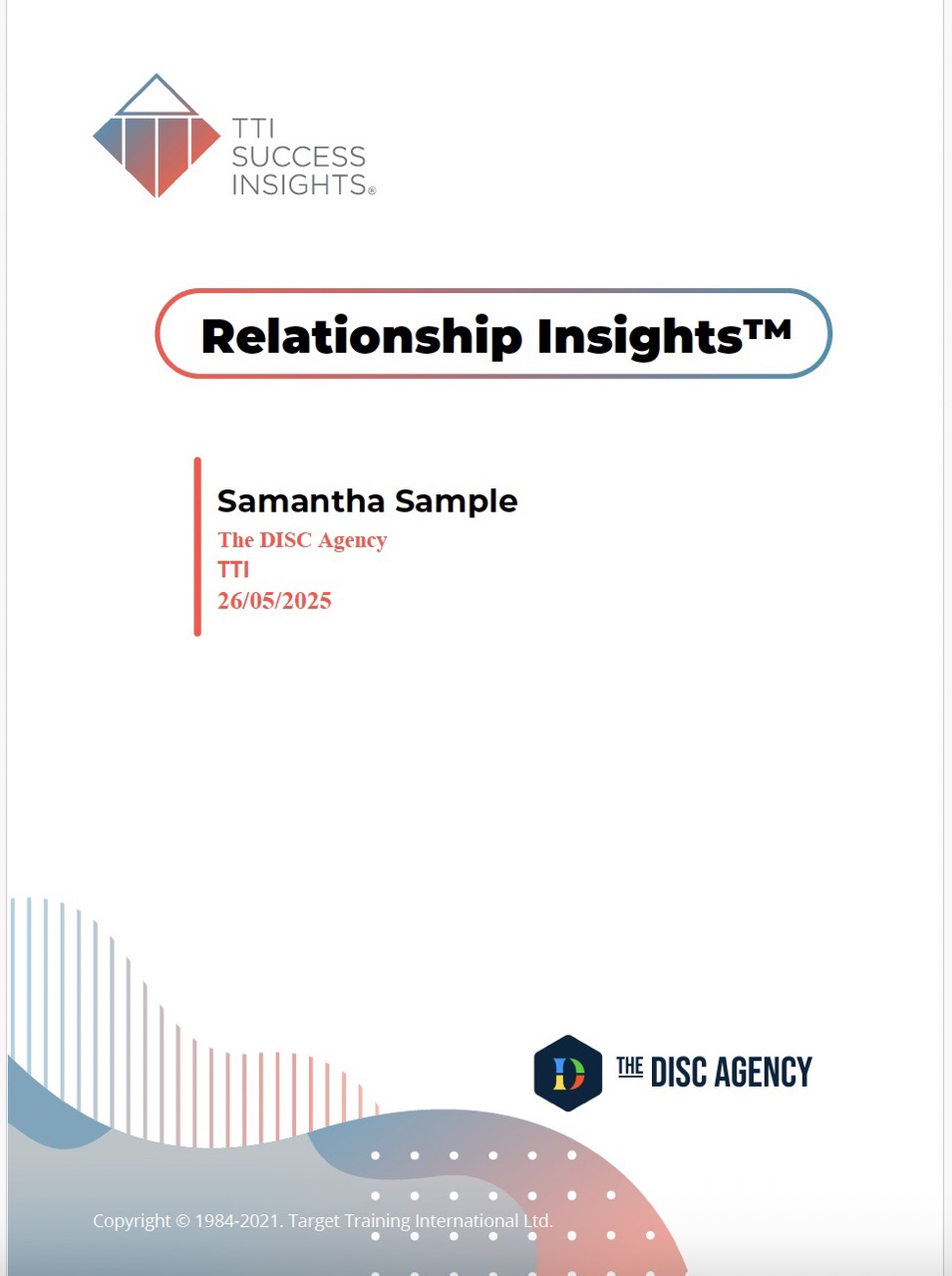
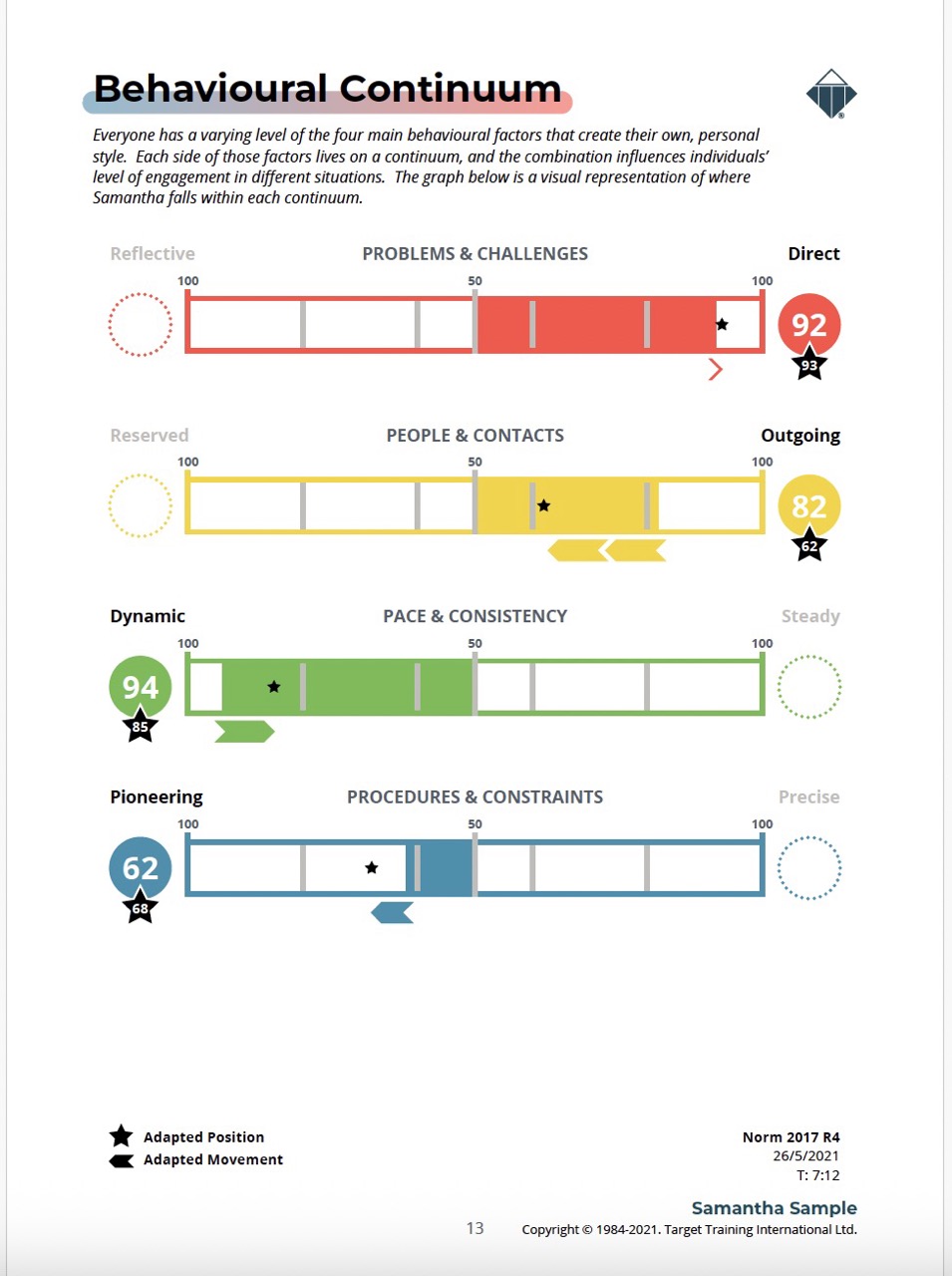
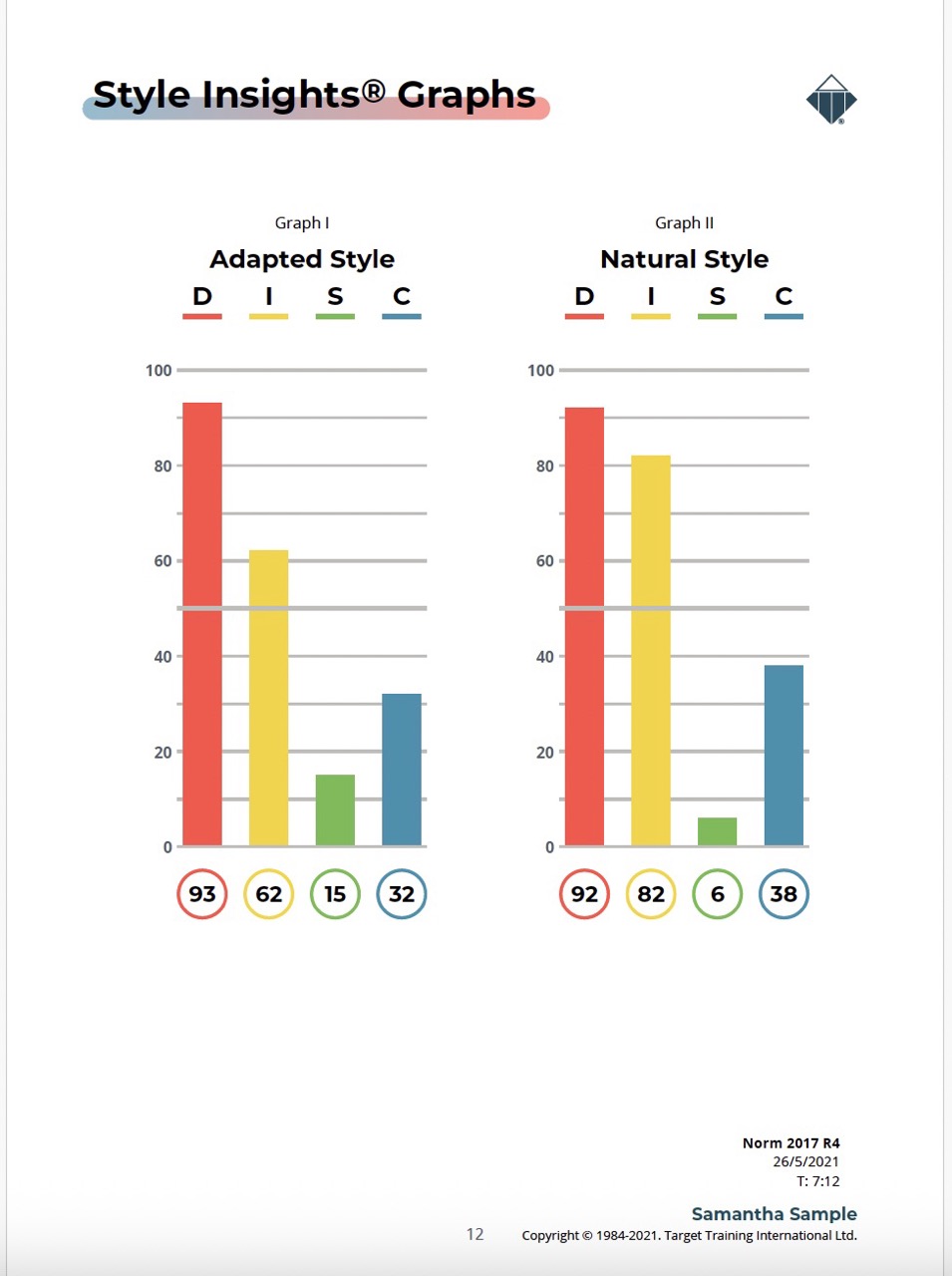
Download a sample Relationship Insights™ Individual Profile.
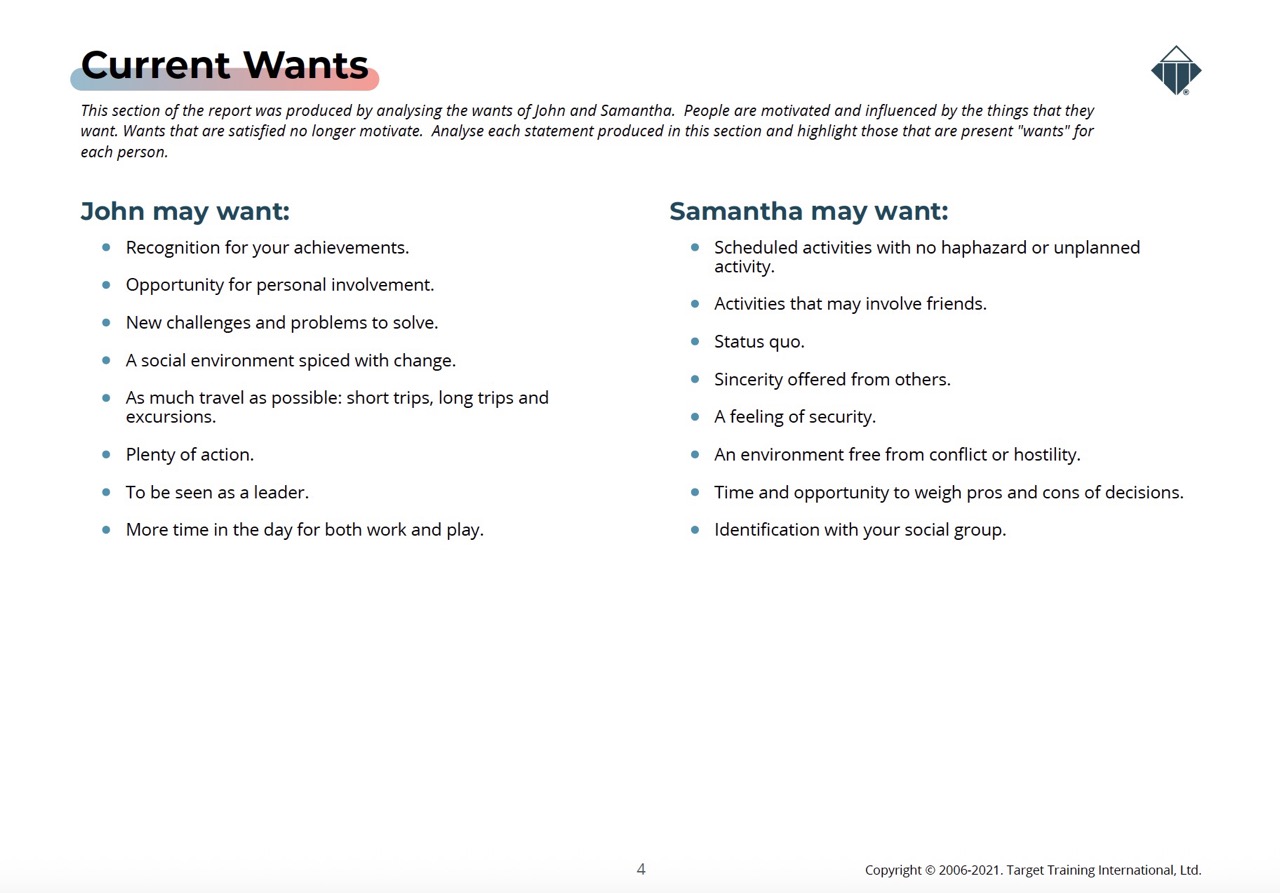
The Relationship Insights™ Individual Profile is designed to help each partner better understand their own behavioural and communication tendencies within relationships.
It can provide insights into areas such as:
- natural behavioural style
- relationship strengths
- communication preferences
- potential communication barriers
- how others may perceive your behaviour
- areas where adaptation may improve interactions
- behavioural tendencies that could create misunderstanding
The starting point is self-awareness.
Because it’s difficult to understand your impact on your partner if you don’t first understand yourself.
What Is the Relationship Insights™ Comparison Report?
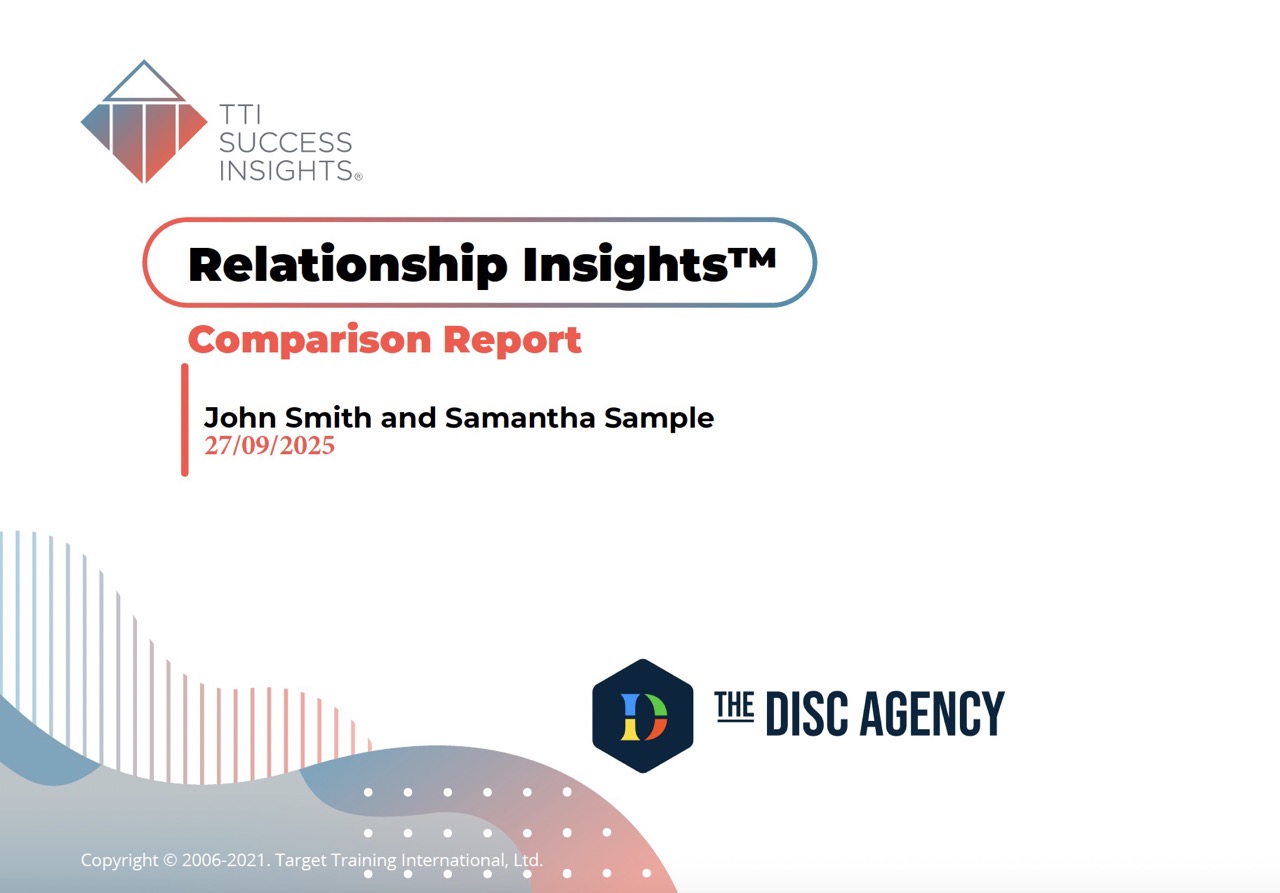
Download a sample Relationship Insights™ Comparison Report.
This is where the two individual profiles come together.
The Relationship Insights™ Comparison Report allows couples to look at their behavioural styles side by side.
Rather than asking:
“Who is the problem?”
The conversation becomes:
“What happens when our two behavioural styles interact?”
That is a completely different question.
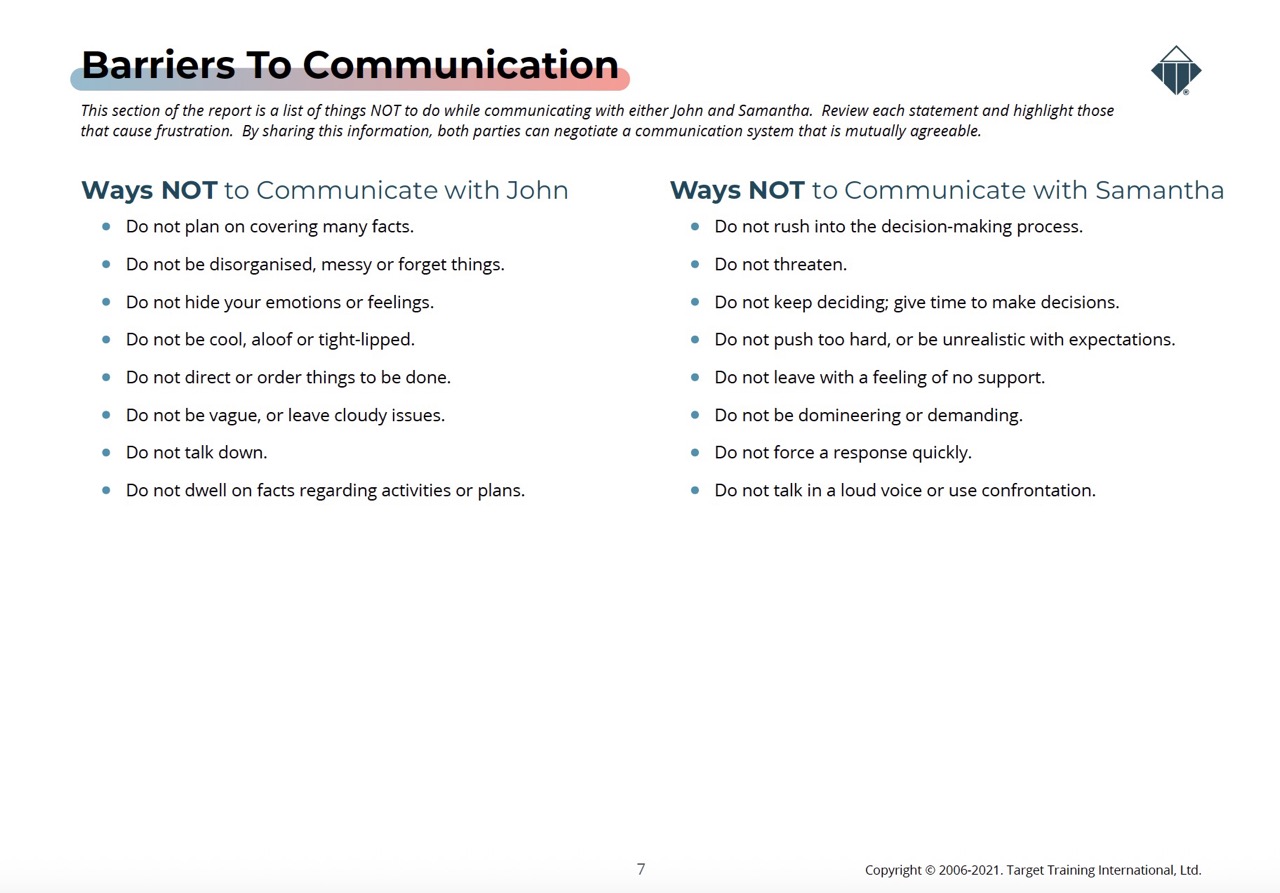
The comparison can help couples identify:
- areas of natural alignment
- areas where behavioural differences may create friction
- how each partner prefers to communicate
- where misunderstandings may occur
- potential conflict triggers
- how one person’s behaviour may be perceived by the other
- practical ways each partner can adapt their communication
For many couples, this is where the biggest “aha” moments happen.
The conversation shifts from:
“Why are you like this?”
To:
“Now I understand why this happens between us.”
Seven Conversations Every Couple Should Have After Completing Their DISC Profiles
Once you understand your profiles, try discussing these questions together.
- What do I do that makes you feel most heard?
Don’t assume you already know.
Ask.
- What happens to you when you’re under pressure?
Do you become more direct?
Quieter?
More emotional?
More analytical?
- How do you prefer difficult conversations to begin?
Timing and approach can make an enormous difference.
- When we disagree, what do you need from me?
Space?
Reassurance?
Facts?
Time?
A decision?
- What behaviour of mine do you sometimes misinterpret?
This can be an incredibly powerful conversation.
- What is one thing I could change in how I communicate with you?
Keep it practical.
- What is one difference between us that actually makes our relationship stronger?
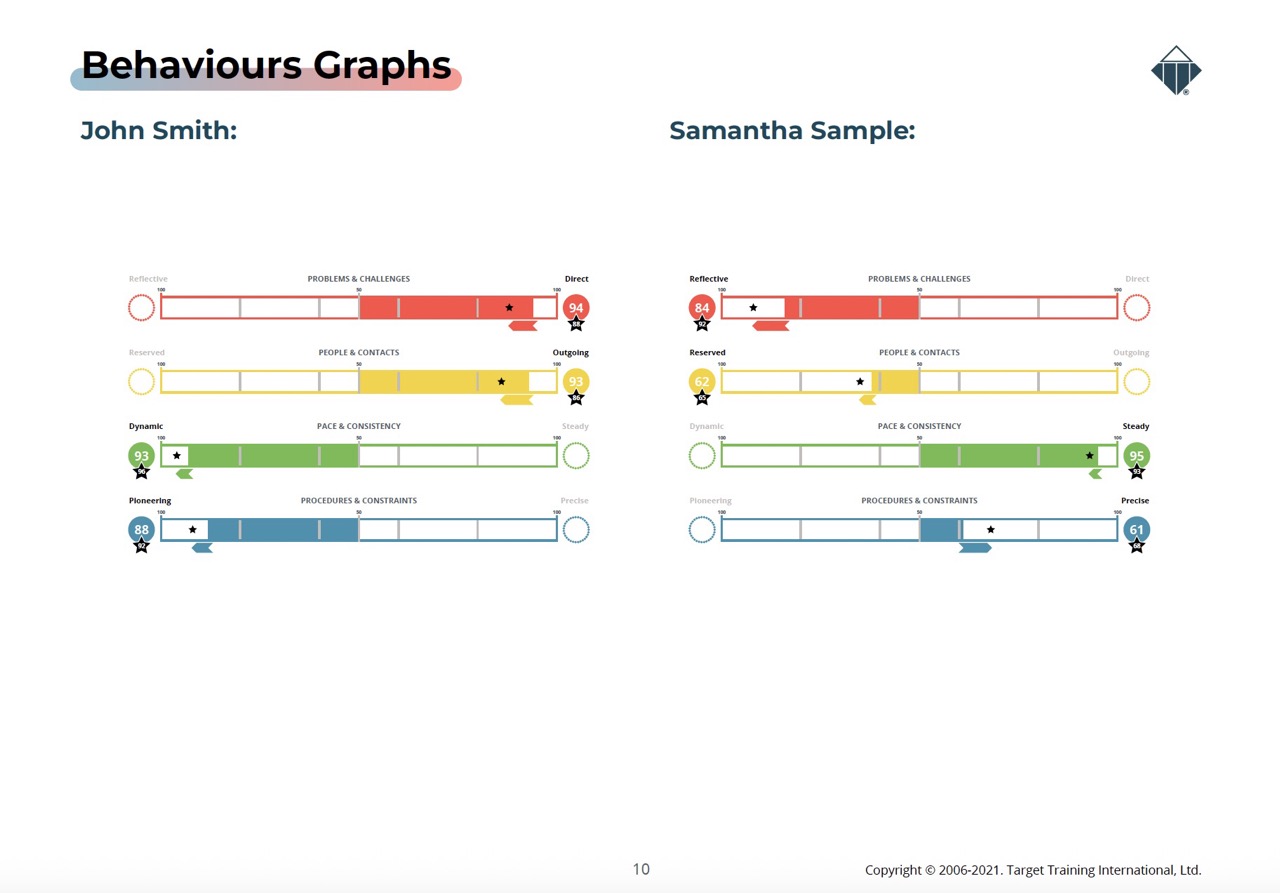
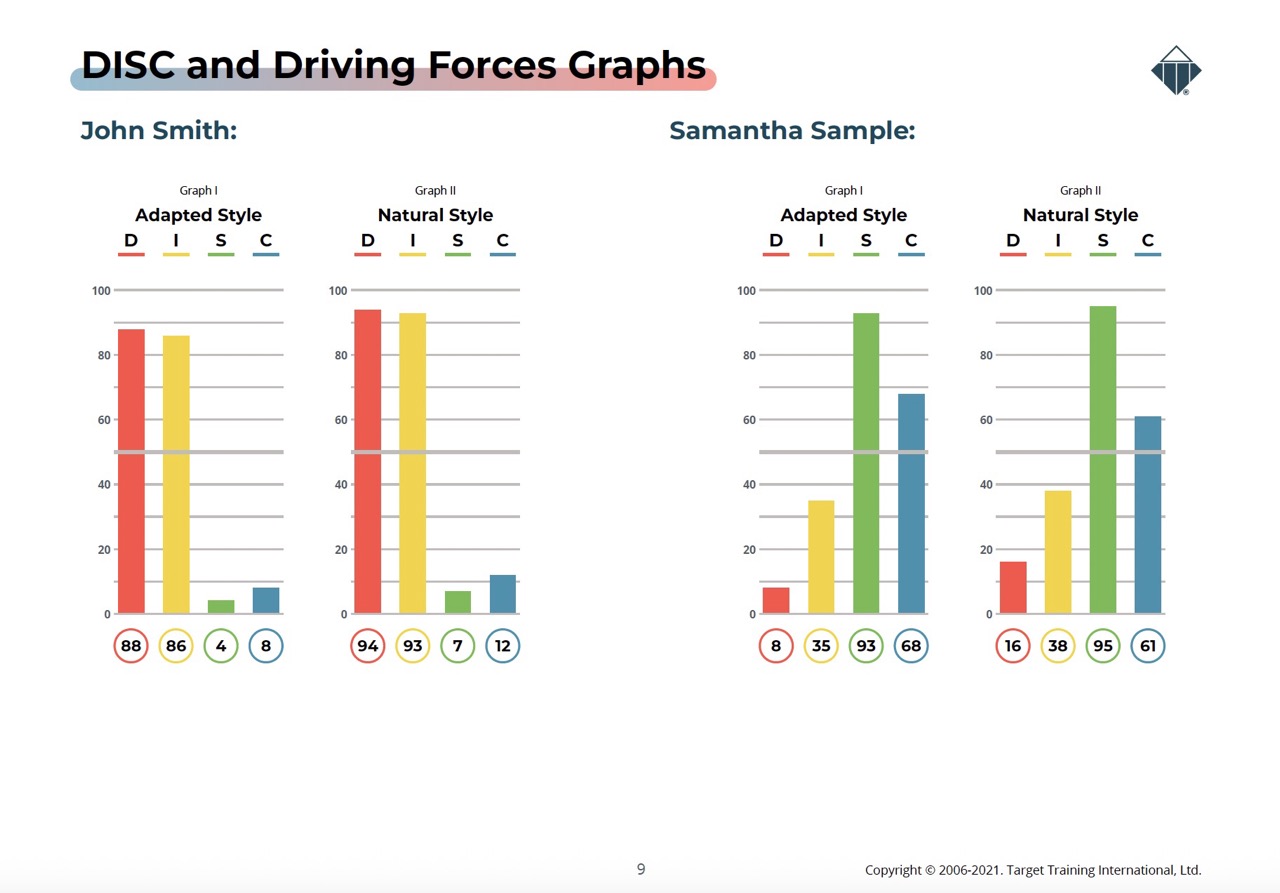
Not every difference is a problem.
Some are your greatest strengths as a couple.
The Goal Isn’t to Stop Disagreeing
Healthy couples disagree.
The goal isn’t to eliminate every argument.
It isn’t realistic.
The real goal is to understand each other well enough that disagreements don’t automatically become personal.
Instead of:
“You always do this.”
You might begin thinking:
“I recognise what’s happening here.”
Instead of:
“You don’t care.”
You might ask:
“Do you need some time before we continue?”
Instead of:
“Why can’t you just make a decision?”
You might ask:
“What information would help you feel comfortable deciding?”
This is what behavioural awareness can create.
Not perfection.
Not a conflict-free relationship.
But a better understanding of the person standing on the other side of the conversation.
The Most Important Person to Understand May Be Yourself
It’s easy to complete a behavioural profile and immediately start analysing your partner.
“That’s exactly what you do!”
But the real value starts somewhere else.
With you.
Ask yourself:
- How do I behave when I’m stressed?
- How does my communication change during conflict?
- Do I become too direct?
- Do I withdraw?
- Do I talk over my partner?
- Do I avoid difficult conversations?
- Do I become overly focused on details?
- Do I expect my partner to communicate exactly like me?
- How might my natural style affect them?
Self-awareness is powerful because it gives you something you can actually control:
Your own behaviour.
You may not be able to change your partner.
But you can become more conscious of how you communicate with them.
And when both partners do that, relationships can change.
Before You Say “We Just Can’t Communicate”, Ask a Better Question
Perhaps the question isn’t:
“Why can’t we communicate?”
Perhaps it’s:
“Have we ever really learned how the other person needs to be communicated with?”
There is a big difference.
Most couples enter relationships knowing very little about behavioural styles.
We learn about each other through trial and error.
Over time, patterns develop.
Some are healthy.
Others become frustrating.
And eventually, we can start believing the problem is the person rather than the pattern.
DISC gives couples an opportunity to step back.
To become curious.
To look at their relationship from a different perspective.
To understand themselves.
And then to understand each other.
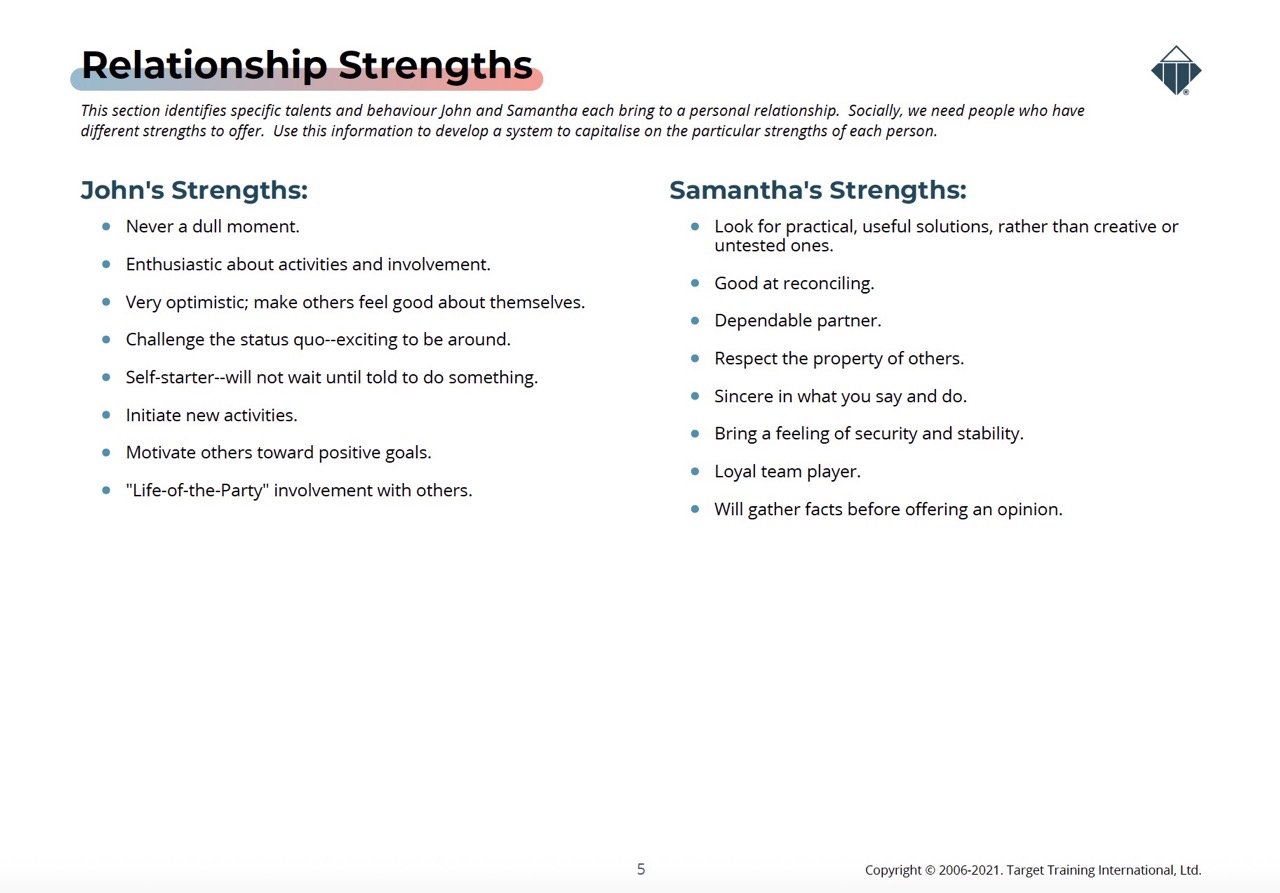
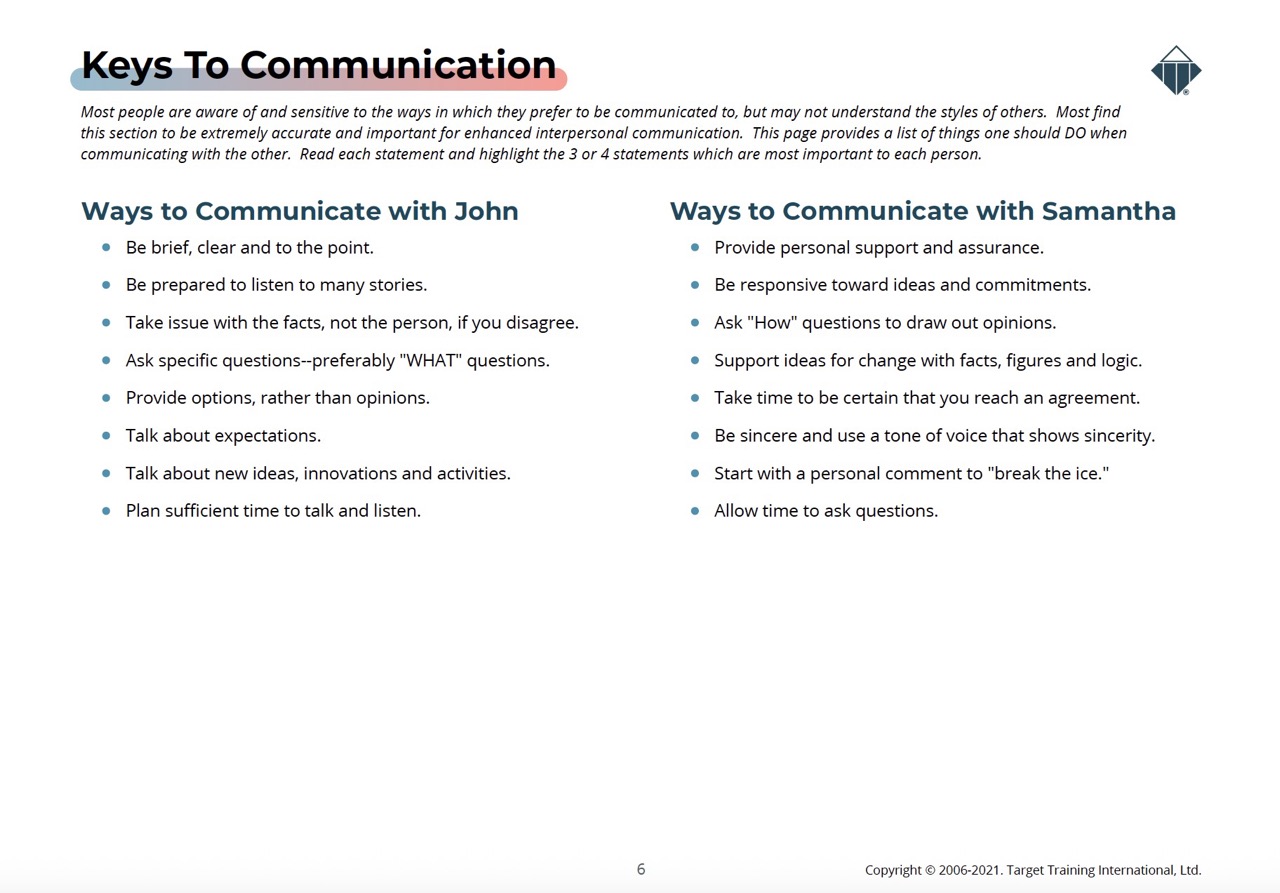
Frequently Asked Questions About DISC for Couples
Can DISC help couples communicate better?
DISC can help couples understand differences in behavioural and communication preferences. This awareness may make it easier to adapt communication, recognise potential triggers and reduce misunderstandings.
Can DISC save a relationship?
No behavioural assessment can guarantee that a relationship will be saved. Relationships are complex and every couple’s circumstances are different. DISC can, however, provide useful insights that may help couples understand each other and have more constructive conversations.
Is DISC couples therapy?
No. DISC is a behavioural profiling and awareness tool. It is not couples therapy, counselling or a mental health assessment.
Can we use DISC alongside couples counselling?
Yes. Behavioural insights may complement counselling or relationship coaching by giving couples a shared language for discussing communication and behavioural differences.
What is a DISC relationship profile?
A DISC relationship profile explores behavioural tendencies that may influence communication and interactions within relationships. It can help individuals understand their own style and how their behaviour may be perceived by their partner.
What is a DISC couples comparison report?
A comparison report brings two individual profiles together to highlight similarities, differences and potential areas of behavioural alignment or friction between partners.
How long does the DISC assessment take?
The online questionnaire typically takes around 10–15 minutes for each person to complete.
Do both partners need to complete a profile?
For the most comprehensive insight, both partners complete their own Relationship Insights™ Individual Profile. A Comparison Report can then bring both sets of results together.
Is our information confidential?
The DISC Agency provides Relationship Insights™ Profiles and Comparison Reports privately and confidentially, with digital delivery available Australia-wide and New Zealand.
Is DISC only for couples having relationship problems?
No. Couples can use DISC proactively to deepen their understanding of each other, improve communication and prepare for major relationship or life transitions.
From “You Don’t Understand Me” to “Now I Understand”
One of the most painful experiences in a relationship is feeling misunderstood by the person who matters most.
But sometimes your partner does care.
They simply don’t communicate it the way you expect.
Sometimes they are listening.
They just process information differently.
Sometimes they aren’t avoiding you.
They need time.
Sometimes they aren’t trying to control you.
They are trying to create certainty.
Sometimes they aren’t criticising you.
They are asking questions because they need information.
And sometimes the person you’ve been fighting against isn’t actually against you at all.
You’re simply two different people trying to navigate life together without a map.
Behavioural awareness can help provide that map.
Because when couples understand the behavioural patterns beneath their communication, something important can happen.
Blame can become curiosity.
Frustration can become understanding.
Difference can become appreciation.
And the same conversation you’ve had 100 times can finally become a different conversation.
Ready to Understand Each Other Better?
At The DISC Agency, we provide DISC Relationship Insights™ Profiles and Comparison Reports for couples across Australia.
The process is private, confidential and completed online.
Relationship Insights™ Individual Profiles
Each partner receives a personalised report exploring their behavioural and communication style within relationships.
Relationship Insights™ Comparison Report
Your individual results are brought together to help identify similarities, differences, potential communication challenges and practical strategies for understanding each other.
Couples Package
2 x Relationship Insights™ Individual Profiles + Relationship Insights™ Comparison Report
$350 + GST
Individual Relationship Insights™ Profile: $150 + GST per person
Relationship Insights™ Comparison Report: $60 + GST per couple
The online questionnaire takes approximately 10–15 minutes per person, and your reports are delivered digitally.
Whether you’re experiencing recurring arguments, communication problems or emotional distance—or you simply want to build an even stronger relationship—understanding each other’s behaviour can be an important place to start.
Call The DISC Agency Australia-wide on 1300 690 469
Email: support@thediscagency.com.au
Explore our Relationship Insights™ for Couples profiles and reports.
Download a sample Relationship Insights™ Individual Profile.
Download a sample Relationship Insights™ Comparison Report.
The DISC Agency – Helping Couples Understand Themselves, Each Other and the Behaviour Between Them.
Relationship Insights™ DISC profiles are behavioural awareness tools and are not a substitute for professional counselling, psychological services, medical advice or mental health care. Couples experiencing significant relationship distress, family violence, abuse, trauma or mental health concerns should seek support from an appropriately qualified professional.