You can have two highly capable, hardworking and committed employees who simply don’t seem to get along.
One thinks the other is too blunt.
The other thinks their colleague is too sensitive.
One wants to make a decision and move forward. The other wants more information before committing.
One loves brainstorming ideas out loud. The other would prefer everyone to stop talking, consider the facts and come back with a well-thought-out recommendation.
Neither person is necessarily difficult.
Neither person is necessarily wrong.
They may simply be behaviourally different.
And understanding those differences can completely change the way people communicate and work together.
When Different Working Styles Become Workplace Conflict
In our DISC workshops across Australia, we regularly work with teams where people genuinely like and respect each other but still experience frustration in their day-to-day interactions.
Often, it starts with something small.
An email seems unnecessarily abrupt.
Someone asks too many questions in a meeting.
A manager changes direction without enough explanation.
A colleague takes too long to make a decision.
Someone talks over others.
Another person won’t speak up until they’ve had time to think.
Individually, these behaviours may not seem particularly significant. But when they happen repeatedly, frustration can build.
Eventually, people stop seeing the behaviour and start making assumptions about the person.
“They’re rude.”
“They’re indecisive.”
“They’re too emotional.”
“They’re controlling.”
“They never listen.”
“They overanalyse everything.”
“They just don’t care.”
This is where a behavioural framework such as DISC can be incredibly powerful.
It gives teams another possibility to consider:
What if the behaviour I’m seeing isn’t personal at all?
Four People Can Experience the Same Situation Very Differently
DISC identifies four primary behavioural styles: Dominance, Influence, Steadiness and Compliance.
Most of us are a combination of these styles, but we tend to have behavioural preferences that influence how we communicate, make decisions, respond to change, approach problems and interact with other people.
Consider a team that needs to make an important decision.
A person with a strong Dominance (D) style may be thinking:
“We’ve discussed this enough. What’s the decision and when can we get started?”
Someone with a strong Influence (I) style may be thinking:
“Let’s get everyone involved, throw some ideas around and see what we can come up with.”
A strong Steadiness (S) style may be thinking:
“How will this affect the team, and does everyone understand what’s changing?”
While a strong Compliance (C) style may be thinking:
“Do we have enough information to know this is the right decision?”
All four can be valuable.
The problem occurs when we judge another person’s behaviour according to our own behavioural preferences.
The High D Thinks: “Why Can’t We Just Make a Decision?”
High-D behavioural styles are often direct, decisive, results-focused and comfortable moving quickly.
These can be fantastic qualities in a workplace.
But imagine a High D working closely with a High C colleague who wants to examine the information, identify potential risks and ensure the details are correct before proceeding.
The D may see the C as:
- Slow
- Overly cautious
- Too focused on detail
- Resistant to making a decision
Meanwhile, the C may see the D as:
- Impatient
- Reckless
- Too demanding
- Making decisions without enough information
Who’s right?
Potentially neither.
One is primarily focused on speed and results. The other is focused on accuracy and quality.
A team needs both.

The High I Thinks: “Why Is Everyone So Negative?”
High-I behavioural styles often bring enthusiasm, energy, optimism and communication to a team.
They may enjoy discussing ideas, involving others and thinking about possibilities.
Put that person alongside a strong C style, however, and things can become interesting.
The I presents an exciting new idea.
The C immediately asks:
“What’s the evidence?”
“How much will it cost?”
“What’s the implementation plan?”
“What are the risks?”
The I may interpret those questions as negativity.
But the C may not be negative at all.
They could simply be doing what comes naturally: testing the idea and making sure it will work.
Understanding that distinction can prevent a potentially valuable working relationship from turning into ongoing frustration.

The High S Thinks: “Why Does Everything Have to Change?”
People with a strong Steadiness style are often patient, dependable, supportive and highly valued team members.
They may also prefer stability, predictability and time to process significant change.
Now put them into an environment led by a fast-paced D style who announces:
“We’re changing the structure. We’re starting Monday. I’ll send everyone the details.”
The D may think they’ve been wonderfully clear and decisive.
The S may be thinking:
“Why weren’t we consulted?”
“What does this mean for everyone?”
“Why are we rushing?”
“Is my role going to change?”
Neither reaction is necessarily right or wrong.
They are experiencing the same situation through different behavioural lenses.

The High C Thinks: “Why Are We Rushing This?”
High-C styles often value accuracy, quality, logic, evidence and clear processes.
They may want time to understand the facts before making an important decision.
In a meeting dominated by faster D and I styles, that can sometimes be interpreted as resistance.
“We’ve already talked about this.”
“You’re overthinking it.”
“We need an answer.”
But the C may have noticed a risk or detail everyone else has missed.
Understanding behavioural differences allows the team to ask a much better question:
Instead of “Why are they being difficult?”
Ask:
“What might they be seeing that I’m not?”
That is a very different conversation.

Behaviour Under Pressure Can Make the Differences Even Greater
Behavioural differences can become even more noticeable when people are under pressure.
Deadlines, organisational change, restructuring, rapid growth, difficult customers, new leadership or heavy workloads can amplify people’s natural behavioural tendencies.
A direct person may become even more direct.
A highly social communicator may talk more.
Someone who values stability may become increasingly uncomfortable with rapid change.
A detail-oriented person may seek even more information before committing.
Unfortunately, these are also the moments when communication matters most.
Without an understanding of behavioural differences, people can easily misinterpret what they’re seeing.
The Danger of Assuming Everyone Should Communicate Like You
One of the most useful lessons we teach in our DISC workshops is also one of the simplest:
The way you like to receive information isn’t necessarily the way the person in front of you wants to receive it.
If you’re highly direct, you may prefer:
“Here’s the problem. Here are the options. Here’s my recommendation.”
Someone else may want context and discussion first.
If you’re highly detailed, you may send a comprehensive email containing everything someone could possibly need to know.
A fast-paced colleague may look at it and think:
“Can someone please tell me the three things I actually need to do?”
Neither approach is inherently better.
Effective communicators learn to adapt.
And that’s where DISC moves from being an interesting personality exercise to becoming a practical workplace communication tool.
What Changes When a Team Understands DISC?
One of the most valuable moments in a facilitated DISC workshop occurs when people begin recognising their colleagues in the different behavioural styles.
There is usually plenty of laughter.
“That’s definitely you.”
“Now I understand why you always ask that!”
“That’s exactly what happens in our meetings.”
But underneath the humour, something important is happening.
People are developing a shared language for behaviour.
Instead of saying:
“She’s difficult.”
They can start thinking:
“She needs more detail before she’s comfortable making the decision.”
Instead of:
“He doesn’t care what anyone thinks.”
It might become:
“He’s very results-focused, so I need to get to the point quickly.”
Instead of:
“She hates change.”
It becomes:
“She needs more context, reassurance and time to understand how the change will affect the team.”
That shift can have a significant impact on workplace relationships.

DISC Isn’t About Putting People Into Boxes
A common misconception about behavioural profiling is that it labels people.
Used properly, DISC should do exactly the opposite.
It helps us recognise that human behaviour is complex and that most people display a combination of behavioural styles.
A DISC profile isn’t there to tell someone:
“This is who you are and this is how you’ll always behave.”
It’s there to provide greater self-awareness.
It helps people understand questions such as:
- How do I naturally communicate?
- How might other people experience my communication style?
- What happens to my behaviour under pressure?
- What are my natural strengths?
- Where might I need to adapt?
- How can I communicate more effectively with someone whose style is very different from mine?
The real value isn’t simply understanding your own DISC style.
It’s learning what to do with that knowledge when working with other people.
Imagine Your Team Understanding Each Other Before Conflict Starts
Think about your own workplace for a moment.
Is there someone who regularly frustrates you?
Someone who communicates very differently from you?
Someone who wants too much detail — or nowhere near enough?
Someone who makes decisions too quickly — or too slowly?
Someone who constantly wants change?
Someone who seems uncomfortable whenever things change?
Now consider this:
What if the very behaviour that frustrates you is also part of what makes that person valuable to your team?
The colleague who asks all those questions may prevent an expensive mistake.
The person pushing everyone to make a decision may stop the team becoming paralysed by analysis.
The person concerned about how change will affect everyone may identify a people issue leadership hasn’t considered.
And the enthusiastic colleague constantly suggesting ideas may discover the next major opportunity.
High-performing teams don’t need everyone to think and behave the same way.
They need people who understand how to work effectively with those differences.
How The DISC Agency Helps Teams Turn Differences Into Strengths
At The DISC Agency, we work with organisations across Australia using DISC behavioural profiling and facilitated workshops to improve communication, strengthen working relationships, develop leaders and reduce unnecessary workplace friction.
Participants can complete an individual DISC behavioural profile before attending a workshop, giving them detailed insight into their natural and adapted behavioural styles, communication preferences and workplace behaviours.
For teams, a Behavioural Whole Team Report can provide another powerful perspective by mapping behavioural styles across the group and helping identify the overall behavioural dynamics within the team.
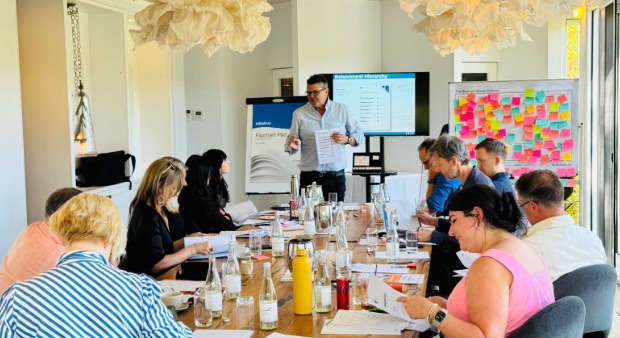
During our facilitated DISC Team Building & Communication Workshops, we bring those insights to life.
Rather than simply handing people a profile and asking them to read it, we help teams understand how their behavioural differences actually play out in meetings, communication, decision-making, change, leadership and everyday workplace relationships.
Most importantly, participants learn practical techniques they can use immediately when communicating with colleagues, managers, direct reports, customers and other stakeholders.
Is Workplace Conflict Always a Bad Thing?
Not necessarily.
Different perspectives can create better decisions.
Different behavioural styles can challenge groupthink.
A strong D can create momentum.
A strong I can create energy and engagement.
A strong S can create stability and connection.
A strong C can create accuracy and quality.
The goal isn’t to eliminate behavioural differences.
The goal is to understand them.
Because when good employees clash, the answer isn’t always to change the people.
Sometimes they simply need to better understand the people they’re working with.
Is Your Team Experiencing Communication Breakdowns or Personality Clashes?
If you’re seeing recurring frustration, communication breakdowns, personality clashes or misunderstandings within your team, DISC can provide a practical framework for understanding what’s happening — and, importantly, what your team can do differently.
The DISC Agency provides:
- Individual DISC behavioural profiles
- Management / Staff DISC Profiles
- Executive DISC Profiles
- Behavioural Whole Team Reports
- Half-Day and Full-Day DISC Team Building & Communication Workshops
- Leadership and Conflict Resolution Workshops
- Onsite and virtual delivery across Australia
Our workshops aren’t designed to tell people who they are.
They’re designed to help people understand themselves, understand others and communicate more effectively with both.
Want to see how DISC could help your team?
Contact The DISC Agency to discuss your team, request a sample DISC profile or explore a facilitated workshop tailored to your organisation.
Call 1300 690 469
Email support@thediscagency.com.au